Source portable mini espresso coffee machine for Home, Hotel, Cafe
Compare 30 listings for the portable mini espresso coffee machine designed for home kitchens, hotel rooms, and commercial cafes. Buyers can evaluate specifications like material, capacity, and customization options to find the right supplier.
Key considerations
Products List


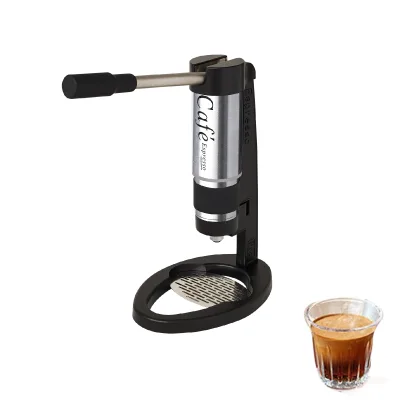
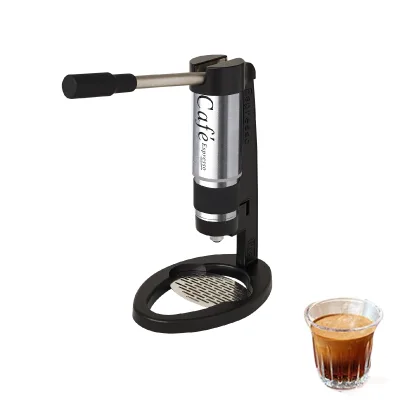


Comprehensive Sourcing Guide
Strategic Sourcing Guide for Portable Mini Espresso Coffee Machines
Understanding Product Definitions and Core Specifications
When initiating a procurement strategy for portable mini espresso coffee machines, buyers must first distinguish between the broad category of coffee makers and the specific operational mechanics of espresso units. The market presents a diverse array of devices, ranging from fully automatic commercial systems to manual, hand-operated units designed for portability. In the context of current supply chain data, the term "portable mini espresso coffee machine" often encompasses devices labeled as "manual espresso machines" or "coffee makers" with specific dimensions and material compositions.
A critical observation from available product attributes indicates that these units frequently operate on a "Manual" automatic grade, driven by manual force rather than electric motors. This is evidenced by specifications listing a power consumption of 0W and a driven type categorized as "Manual." For buyers seeking true portability, this distinction is vital, as it eliminates the need for external power sources, making the equipment suitable for environments where electricity is unavailable or where compactness is paramount.
The physical footprint of these machines is another defining characteristic. Available data points to dimensions such as 275x180x377mm, suggesting a compact form factor suitable for small kitchens, hotel rooms, or mobile setups. The weight varies significantly across listings, with some units recorded at 5.2 kg and others at 10 kg. This variance suggests that "mini" is a relative term dependent on the internal housing material and the inclusion of auxiliary components. Buyers should verify the exact weight and dimensions against their specific logistical constraints, as a 10 kg unit may not meet the strict definition of "portable" for certain field applications.
Material Composition and Construction Quality
The durability and safety of a portable espresso machine are inextricably linked to its material composition. The supply data highlights a prevalence of metal construction, specifically citing "SUS304" stainless steel and "Aluminum" for housing materials. SUS304 is a standard grade of stainless steel widely recognized in the food and beverage industry for its corrosion resistance and ability to maintain hygiene standards. When sourcing these units, verifying that the internal water pathways and brewing chambers utilize SUS304 is essential to prevent contamination and ensure longevity.
In addition to the primary structural materials, the "Housing Material" is often listed as Aluminum. Aluminum offers a favorable strength-to-weight ratio, which is beneficial for portable equipment, though it may require specific surface treatments to prevent oxidation or scratching. The "Filling Material" specifications indicate compatibility with water, powder, and other substances, suggesting that the internal seals and filters must be robust enough to handle various coffee formats, including coffee powder and coffee pills.
The "Packaging Material" is noted as paper products and other types, which implies that the unit is designed for retail or bulk shipping in cardboard cartons. However, the internal packaging must be sufficient to protect the delicate mechanical components, such as the pump pressure systems, during transit. Buyers should request photos of the internal packaging to ensure that the machine is secured against impact, particularly given the "Single" piece selling unit nature of many listings.
Technical Performance and Operational Mechanics
The operational performance of these machines is defined by their working principles and filling capabilities. The data explicitly mentions a "Working Principle" of "Pump Pressure," which is the fundamental mechanism for extracting espresso. However, a contradiction exists in the data where some units are described as "Manual" while others list a "Procedure" as "Full-Automatic." This discrepancy requires careful verification by the buyer. A manual unit relies on the user to generate the necessary pressure, whereas a full-automatic unit would typically involve electric pumps and sensors.
For the specific "manual espresso machine" category, the "Filling Accuracy" is listed as ±75ml. This tolerance level is relatively wide and suggests that these machines may be better suited for batch preparation or specific coffee styles rather than high-precision commercial espresso extraction. Buyers seeking consistent shot volumes must inquire whether the machine includes adjustable flow controls or if the ±75ml variance is inherent to the manual operation method.
Furthermore, the "Machinery Capacity" is noted as 100BPH (Bottles Per Hour) or "Other," which is a metric typically reserved for industrial filling lines rather than individual portable units. This suggests that the data may aggregate information from different product tiers. For a portable unit, the capacity is more accurately described by the "Capacity" attribute, which ranges from 5 to 10 cups. This range defines the throughput for a single brewing cycle, making the machine suitable for small groups or individual use in home, kitchen, or hotel room settings.
Compliance, Certification, and Safety Standards
Navigating the regulatory landscape is a critical step in B2B procurement, especially for equipment that comes into direct contact with consumables. The provided data indicates that products in this category often carry certifications such as "FDA," "CE," and "ISO." The presence of "FDA" certification implies compliance with United States Food and Drug Administration standards regarding materials safety, while "CE" and "EU" markings indicate conformity with European health, safety, and environmental protection standards.
However, buyers must exercise caution and treat these certifications as observations rather than universal guarantees for every listed product. The data shows variations, with some entries listing "CE ISO" while others list "FDA, CE / EU." It is imperative for the procurement team to request valid, current certification documents for the specific model being purchased. Relying on a general claim without verifying the specific certificate number and issuing body can lead to compliance failures in the destination market.
Additionally, the "Machinery Test Report" is listed as "Not Available" in several instances. This absence highlights a potential gap in third-party verification for performance metrics. Buyers should explicitly request test reports or performance data sheets from the supplier to validate claims regarding pressure stability, temperature control, and material safety. Without these documents, the buyer assumes the risk that the product may not meet the safety standards required for commercial deployment.
Cost Drivers and Procurement Economics
The pricing and minimum order quantity (MOQ) structures for portable mini espresso machines are influenced by several factors, including material costs, customization levels, and the complexity of the manufacturing process. The observed price range in the market spans from 10 to 97 USD, a significant variance that reflects differences in build quality, brand positioning, and feature sets. Units at the lower end of this spectrum may utilize more basic materials or lack advanced features, while those at the higher end likely incorporate premium stainless steel, better insulation, or enhanced ergonomic designs.
The "MOQ" (Minimum Order Quantity) is observed to range from 1 piece to 3000 pieces. This wide range offers flexibility for different buyer profiles. Small retailers or startups may be able to source single units, often labeled as "Single item" selling units, while larger distributors may negotiate bulk pricing for orders up to 3000 pieces. The "Customization" attribute is marked as "Available," which can significantly impact the final cost. Customization options, such as branding, color variations (noted as "Multicolor," "Black," or "White"), or specific packaging requirements, will typically incur additional fees and may extend the lead time.
Buyers should also consider the "After-sales Service" and warranty terms as part of the total cost of ownership. The data indicates a standard "1 Year" warranty and "Online support" or "Video Technical Support" for after-warranty service. These support mechanisms are crucial for minimizing downtime and ensuring that any operational issues can be resolved quickly. When evaluating suppliers, the cost of the unit should be weighed against the comprehensiveness of the support package and the availability of spare parts.
Supplier Evaluation and Quality Assurance Protocols
Selecting the right supplier requires a rigorous evaluation process that goes beyond price and basic specifications. The "Place of Origin" for many of these units is listed as "Zhejiang, China," a region known for its manufacturing capabilities in machinery and hardware. While this provides a pool of potential suppliers, it also necessitates a thorough vetting process to ensure quality consistency.
Buyers should prioritize suppliers who demonstrate transparency in their manufacturing processes. Key indicators of a reliable supplier include the availability of detailed product models (e.g., "Pro-B" or "1-1"), clear documentation of core components, and a willingness to provide samples for testing. The "Advantage" of "Easy Operation High Efficiency" is a common selling point, but buyers must verify this claim through hands-on testing to ensure the machine meets their operational standards.
Quality control should be integrated into the procurement workflow. Given the "Machinery Test Report" is often unavailable, buyers may need to implement their own quality assurance protocols. This could involve third-party inspection services to verify material composition, structural integrity, and functional performance before shipment. The "Weight" and "Dimension" specifications should be cross-checked against the physical product to ensure they match the order specifications, as discrepancies can indicate quality control issues.
Long-Term Procurement and Application Strategy
The long-term viability of sourcing portable mini espresso machines depends on aligning the product with specific application scenarios. The data suggests these units are suitable for "Food, Beverage, Machinery & Hardware" applications, as well as "Home Kitchen Hotel Room" environments. The "Style" is often described as "Italian," which may appeal to markets seeking a traditional aesthetic, while the "Suitable for" attribute highlights compatibility with "coffee powder" and "capsule" formats.
For commercial applications, such as hotels or cafes, the "Usage" classification of "Commercial, Home Use" indicates versatility. However, the "Manual" driven type may limit throughput in high-volume settings. Buyers should assess whether the 5-10 cup capacity per cycle meets their daily demand or if they require a higher-capacity solution. The "After-sales Service Provided" of "Online support" is a key factor for long-term maintenance, ensuring that technical issues can be addressed remotely without the need for immediate physical intervention.
In conclusion, sourcing portable mini espresso coffee machines requires a balanced approach that considers technical specifications, material quality, regulatory compliance, and supplier reliability. By carefully analyzing the available data and conducting thorough due diligence, buyers can identify products that meet their specific operational needs while mitigating risks associated with quality and compliance. The flexibility in customization and the range of pricing options provide opportunities for tailored procurement strategies that align with both budgetary constraints and performance expectations.
FAQs
What certifications do portable mini espresso machines typically have?
These machines often carry FDA, CE, and ISO certifications to ensure safety and compliance. Buyers must verify specific documents for each model as availability varies, since some listings show CE ISO while others list FDA and EU marks without guaranteed universal coverage.
How is the power consumption defined for manual espresso units?
Manual portable espresso machines operate with zero wattage as they are driven by manual force rather than electricity. This design eliminates the need for external power sources, making them suitable for locations where electrical connections are unavailable or limited.
Which materials are used for the housing and internal components?
Housing is typically made of aluminum while internal parts often use SUS304 stainless steel for durability and hygiene. These materials ensure corrosion resistance and safety for food contact, though specific construction details should be confirmed against the actual product listing.
Can buyers customize the color and packaging of these machines?
Customization is available for colors like multicolor, black, or white, as well as packaging types such as cartons. Buyers should expect potential additional costs and extended lead times when requesting specific branding or non-standard packaging configurations for their orders.
What is the typical weight and dimension range for these units?
Dimensions are often around 275x180x377mm with weights ranging from 5.2 kg to 10 kg depending on the model. This variance affects portability, so buyers must check specific weight specifications to ensure the unit meets their logistical and handling requirements.
How does the filling accuracy impact espresso extraction consistency?
Filling accuracy is listed as ±75ml, which allows for a wide variance in water volume per cycle. This tolerance suggests the machine is better suited for batch preparation or specific coffee styles rather than high-precision commercial extraction requiring strict shot volumes.